Every year, hundreds of thousands of Pakistanis travel for Umrah. Many of them are going for the first time, and most of the anxiety they carry is about the practical side rather than the spiritual one: whether the paperwork is right, what to pack, how the rites actually work, and what happens when they land.
This guide covers all of it, in the order you will need it.
Before you book
When to go
Umrah can be performed at any time of year, and the season you choose changes the cost of the trip substantially. Ramadan carries the greatest reward and the greatest crowds, and prices in both cities rise sharply — particularly for the last ten nights. The months immediately after Hajj and the winter period are considerably quieter and cheaper. Summer in Makkah is extremely hot, which matters if elderly parents are travelling.
How long to stay
Ten days is the shortest practical trip. Fourteen to fifteen days is the most common and the most comfortable. Twenty-one days or more suits retired travellers and those going in Ramadan. The split between cities matters as much as the total: most pilgrims wish afterwards that they had spent longer in Madinah.
Choosing a package
Compare packages on three things, in this order: the actual walking distance from the hotel to the Haram, the room occupancy, and the flight routing. Star ratings matter far less than any of these. A four-star hotel 300 metres from the Haram will serve you better than a five-star hotel 1,200 metres away, and a direct flight will save you the better part of two days over a routing with a long transit.
Ask for the inclusions in writing. A package that looks cheaper often excludes transport, ziyarat or meals that the comparison package includes.
Documents and requirements
Passport
You need a machine-readable passport with sufficient remaining validity. Check the expiry date now rather than three weeks before departure — passport renewal in Pakistan takes time, and it is the single most common reason a booking has to be rescheduled.
The Umrah visa
Umrah visas are issued electronically through the Saudi Ministry of Hajj and Umrah's Nusuk platform, and are tied to confirmed accommodation and travel arrangements. This is why the visa is arranged as part of a package rather than separately. Processing usually takes a few working days with a complete file, longer during Ramadan.
Vaccination
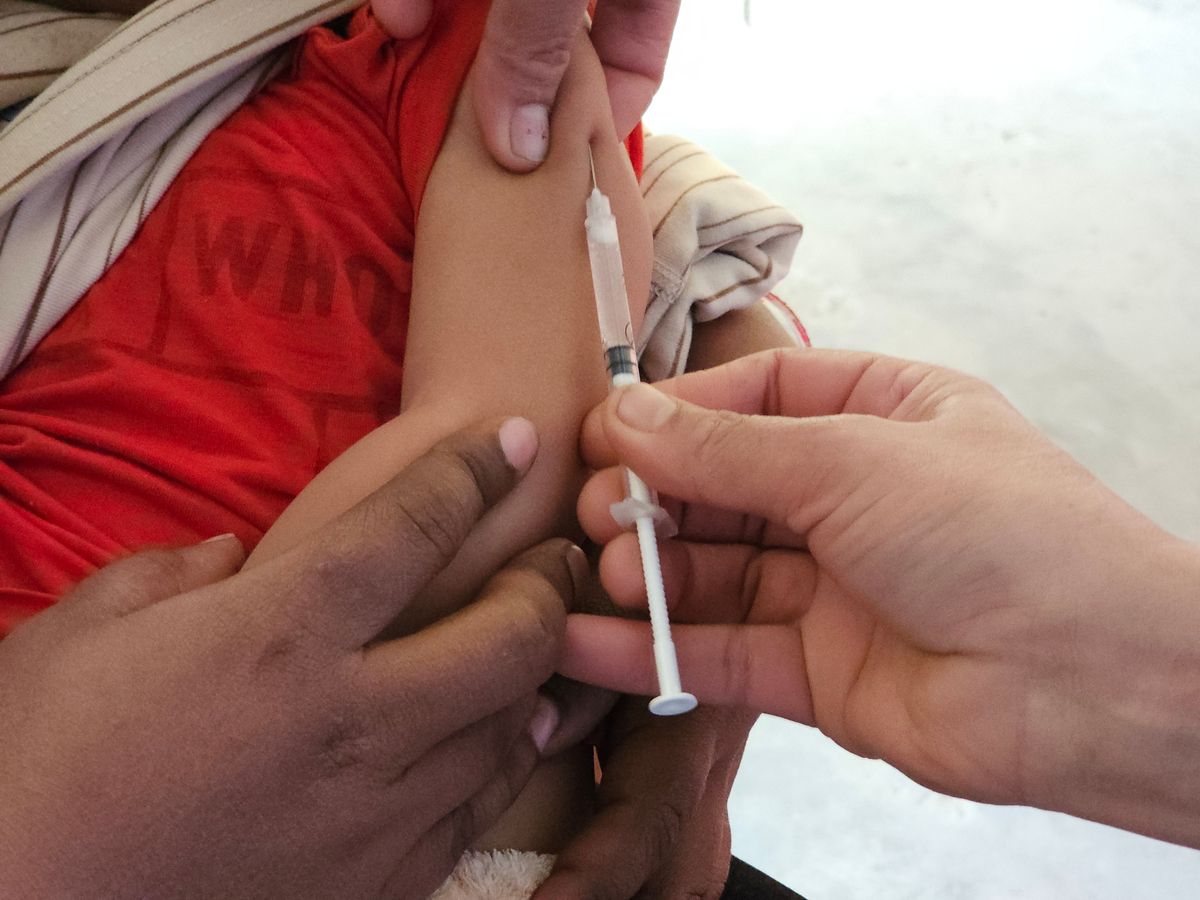
Meningococcal ACYW vaccination is required for pilgrims, and polio vaccination documentation is required of Pakistani passport holders. Pakistan now requires NADRA-integrated digital vaccination records for outbound Hajj and Umrah travellers — the paper cards that sufficed in earlier seasons are no longer enough on their own. Arrange this early: the meningitis vaccine needs to be given a period before departure to be valid.
What to pack
Pack less than you think. You will be in ihram for part of the trip and in simple clothing for the rest, and you will want luggage space for Zamzam, dates and gifts on the return.
- Ihram — two sets for men, so one can be washed. Women wear ordinary modest clothing; there is no specific garment.
- An ihram belt with a zip pocket for your passport, cash and phone.
- Unscented toiletries — soap, shampoo, toothpaste and deodorant. Scented products are not permitted in ihram.
- Comfortable sandals that can be carried in a small bag. You will remove them constantly.
- A light prayer mat and a small folding umbrella for sun.
- Regular medication in original packaging with the prescription.
- A power bank and a universal adapter.
- A drawstring bag for shoes at the Haram.
Performing Umrah, step by step
1. Ihram
Ihram is both the state and the clothing. You enter it at or before the miqat — for pilgrims flying into Jeddah, this is usually done before boarding or announced in flight. Men wear two unstitched white sheets; women wear ordinary modest dress. Perform ghusl or wudu, put on the ihram, pray two rak'ah where possible, and make the intention for Umrah.
From this point the restrictions of ihram apply: no perfume or scented products, no cutting hair or nails, no marital relations, no hunting, and for men, no stitched clothing and the head remains uncovered.
2. Talbiyah
Recite the talbiyah frequently from the point of entering ihram until you begin tawaf: Labbayk Allahumma labbayk, labbayka la sharika laka labbayk, innal-hamda wan-ni'mata laka wal-mulk, la sharika lak.
3. Tawaf
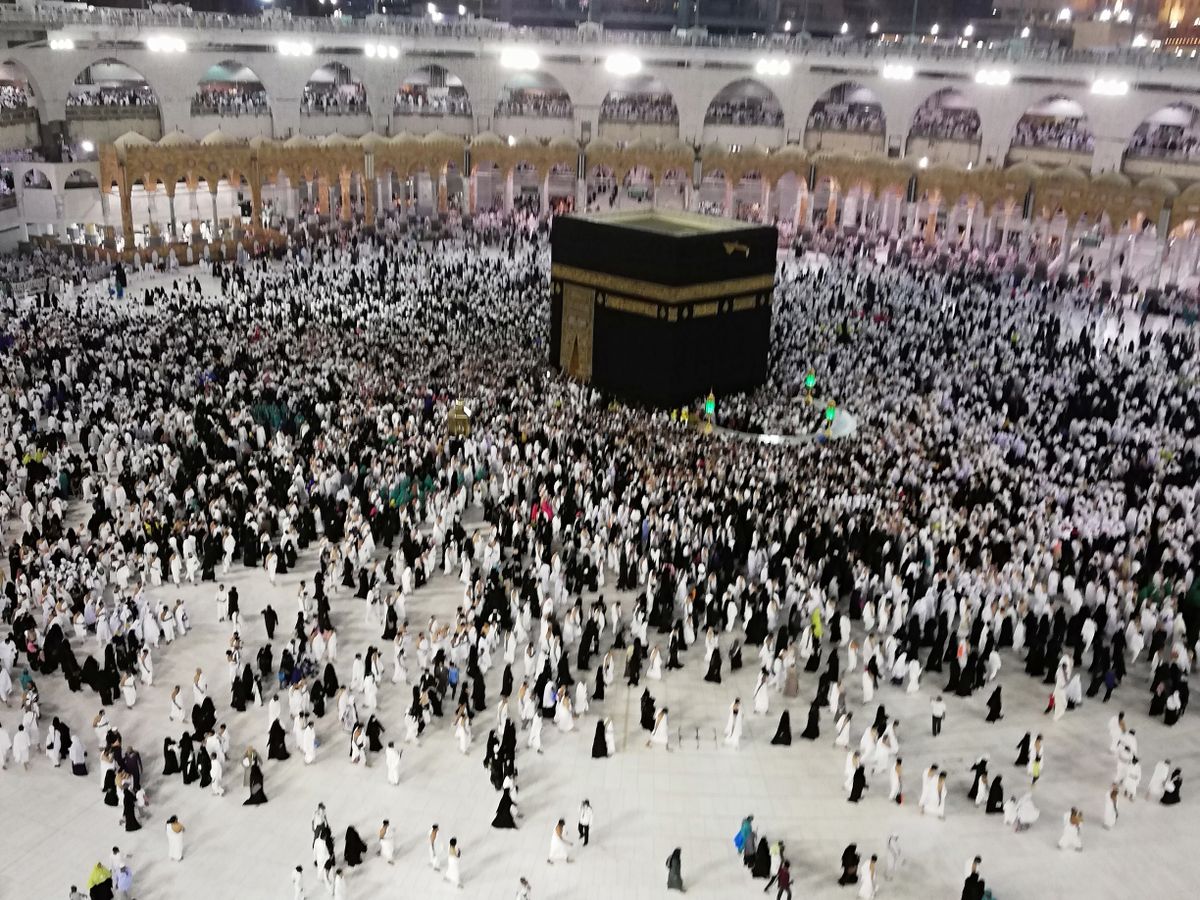
On reaching Masjid al-Haram, perform seven circuits of the Kaaba anti-clockwise, beginning and ending at the Hajr al-Aswad. Point towards the Black Stone at the start of each circuit and say Bismillah, Allahu Akbar. There is no prescribed du'a for each circuit — make whatever supplication you wish.
Men perform idtiba (leaving the right shoulder uncovered) throughout, and ramal (walking briskly) in the first three circuits where the crowd allows. After completing the seven, pray two rak'ah behind Maqam Ibrahim if you can reach it, and drink Zamzam.
4. Sa'i
Proceed to Safa and make seven trips between Safa and Marwah, beginning at Safa and ending at Marwah. Each single traverse counts as one, so Safa to Marwah is one and Marwah to Safa is two. Men jog lightly between the green markers; women walk throughout.
5. Halq or Taqsir
Men either shave the head completely (halq) or trim the hair (taqsir); shaving carries greater reward. Women cut a fingertip's length from the end of their hair. With this, the Umrah is complete and the restrictions of ihram are lifted.
Madinah
Madinah is not part of the rites of Umrah, but almost every pilgrim from Pakistan visits, and few regret the time spent there. The atmosphere is markedly calmer than Makkah.
Pray in Masjid an-Nabawi, send salaam at the blessed grave of the Prophet ﷺ, and visit the Rawdah — access to which is managed through the Nusuk platform with allocated time slots. Visit Jannat al-Baqi, Masjid Quba, Masjid al-Qiblatayn and Uhud. Our ziyarat tours cover all of these with a guide.
Practical advice on the ground
- Hydrate constantly. The dry heat dehydrates you faster than you notice. Zamzam is available throughout both Harams.
- Protect your feet. The marble is hot in the afternoon and cold at Fajr. Keep a shoe bag with you rather than leaving sandals at a gate.
- Note your gate number. Both Harams are enormous and disorientating. Photograph the gate number you enter by.
- Agree a meeting point. Phones lose signal in the crowds. Fix a specific landmark and time with your group before entering.
- Pace yourself. Pilgrims routinely exhaust themselves in the first three days. The trip is longer than that.
- Buy a local SIM at the airport. Data is cheap and makes coordination far easier.
A note on cost
Umrah package prices from Pakistan move considerably through the year, driven by hotel rates in both cities, airfares and the season. Anyone quoting you a fixed annual figure is quoting you something out of date. Send us your dates and requirements and we will give you current, real numbers.
Need help with your travel plans?
Our consultants can answer your questions and arrange the whole trip.
Frequently Asked Questions
The rites themselves — tawaf, sa'i and cutting the hair — usually take two to four hours depending on the crowds. The trip as a whole is normally ten to twenty-one days, most of which is spent in prayer and ziyarat rather than in the rites.
Yes. Pilgrims commonly perform additional Umrah by leaving the haram boundary to enter ihram again, usually at Masjid Aisha in Taneem, which our ziyarat tour includes as a stop.
Ordinary modest clothing — there is no specific garment for women in ihram. The face and hands are left uncovered during ihram. Comfortable, loose and breathable clothing is the practical advice.
It varies widely by season, hotel category, distance from the Haram, room sharing and airfare. Rather than publish a figure that dates within weeks, we quote current pricing on request.